姓名
Name Reading
Every stroke counts.
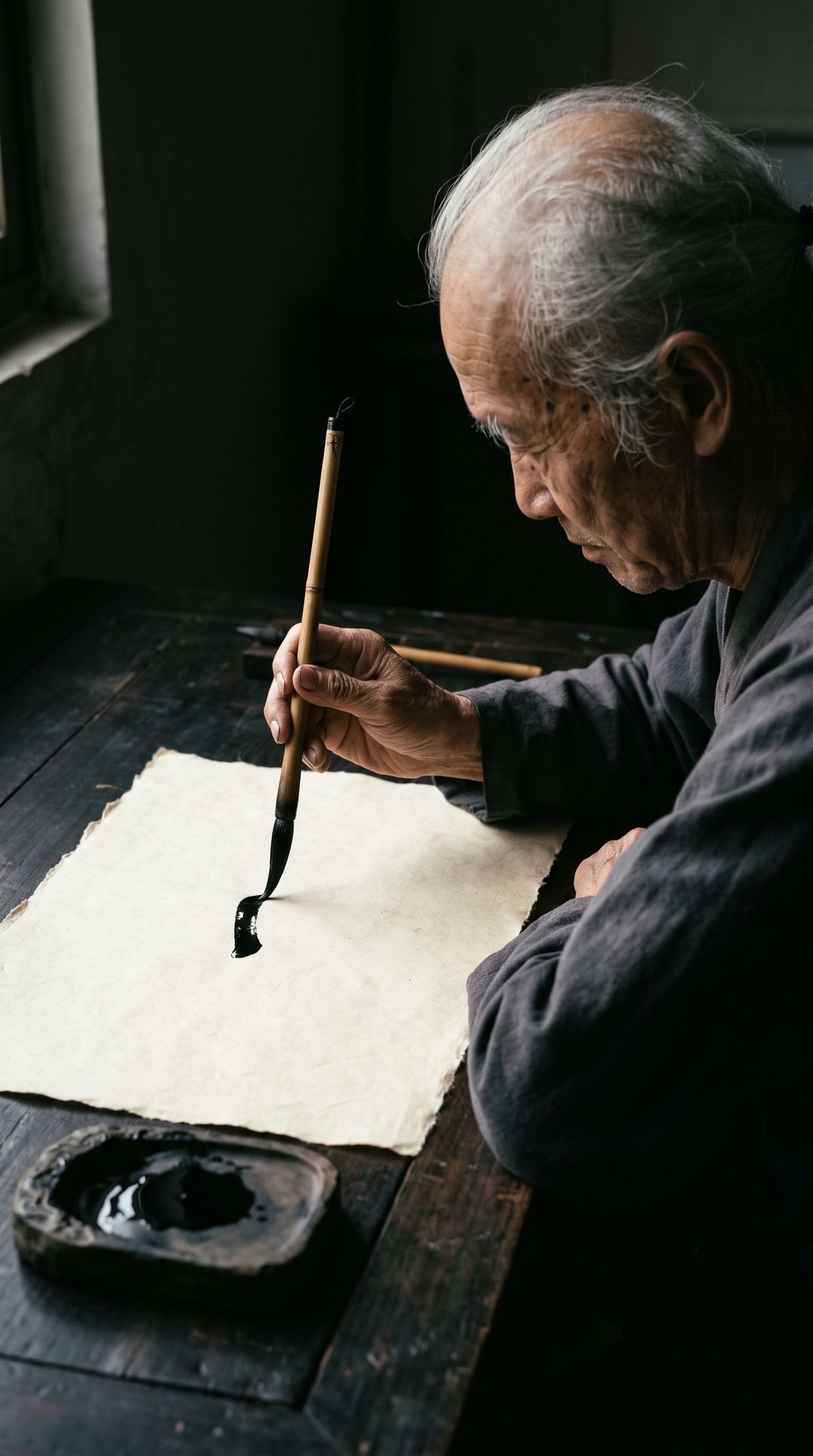
You have been signing your name all your life. The old calligrapher Old Mo counts every stroke the traditional way and sets it into the Five Grids.
Write my nameName Reading
You have been signing your name all your life. The old calligrapher Old Mo counts every stroke the traditional way and sets it into the Five Grids.
Write my nameName study is a folk tradition. It counts the strokes of a name in the old written forms, then adds them into five numbers, the Five Grids, each one speaking to a part of a life.
Every number falls on the old table of eighty-one and carries one of the five elements. How those elements pass from one to the next is the character of the name.
Your guide
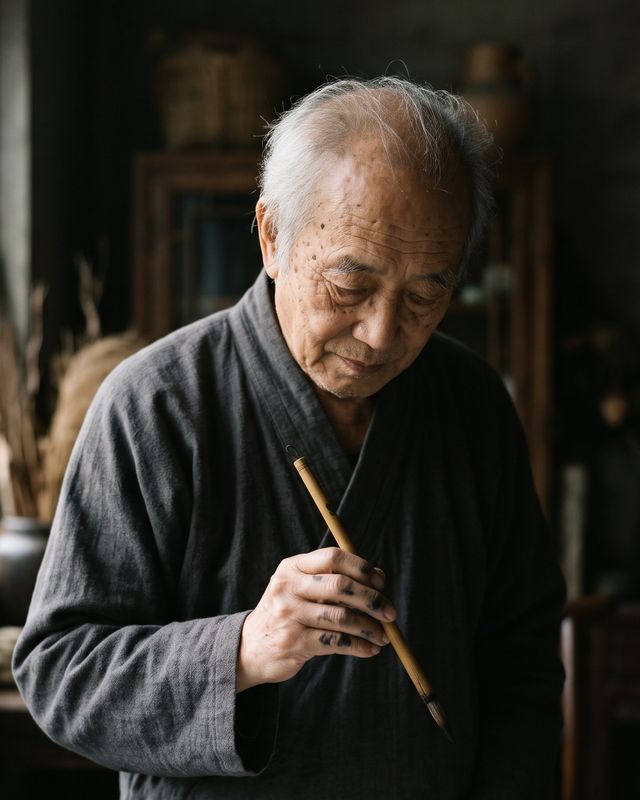
He has ground ink for a lifetime and written name cards and family letters for generations of neighbours. A person writes their own name more than any other word, he says, so no stroke of it should be careless. Old Mo is a character of our own telling.
Two to four characters, family name first. Simplified or traditional is fine. Your name stays on this device. Nothing is sent.
This reading counts the strokes of Chinese characters, so it needs a name written in Chinese. If family or a teacher ever gave you one, please write it above. If not, you are very welcome at these readings, which need no Chinese name:
Everything is counted in the older Kangxi dictionary forms, and simplified characters are first returned to their traditional form. Shortened radicals count as their full characters: 氵 as 水 (4), 扌 as 手 (4), 忄 as 心 (4), 艹 as 艸 (6), 辶 as 辵 (7), the 王 side as 玉 (5), the flesh 月 as 肉 (6), left 阝 as 阜 (8), right 阝 as 邑 (7). The numerals one to ten count as their value, so 四 is 4 and 十 is 10. Schools differ a little; this is the most common way.
0